Chalkboard Literacy: A Phoenix Drinker’s Guide to Tap List Shorthand
Photo: The Bushranger, CC BY-SA 4.0, via Wikimedia Commons
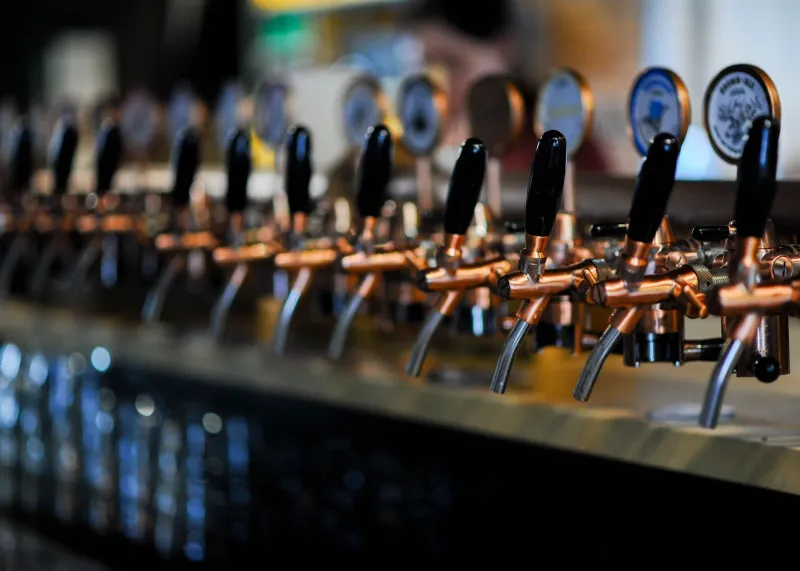
You’re standing at the bar on a Friday, the chalkboard has twenty-four handles, half the names are puns, and the beertender is already pouring for three people at once. The list in front of you is not a quiz. It’s a map. And like any map, it gets a lot easier once you know what the symbols mean.
Phoenix tap lists have gotten longer and stranger in the last few years. That’s a good problem. But it also means ordering by the funniest name is a strategy with a real failure rate. Here’s a practical way to read the board without guessing, without holding up the line, and without ending up with a pint you didn’t actually want.
Start With the Legend: ABV and IBU Are Coordinates
Almost every tap list gives you two numbers. ABV—alcohol by volume—tells you how strong the beer is. IBU—international bitterness units—tells you roughly how bitter it is. Neither number is a grade. A high IBU does not mean “better,” and a low ABV does not mean “boring.”
Think of them as coordinates. A 4.2% pilsner and a 10% barrel-aged stout live in different neighborhoods on the map. So do a 30 IBU amber and a 70 IBU West Coast IPA. If you know you want something crisp and sessionable, scan for the lower ABV first. If you want a slow sipper for a cool November evening, start at the top of the range.
One useful wrinkle: IBU is not the same as perceived bitterness. A roasty stout with a high IBU number can taste smoother than a lean pale ale with a lower one, because malt sweetness and body change the picture. Use IBU as a hint, not a verdict.
Style Names Are Neighborhoods, Not Addresses
“Stout” can mean a dry Irish stout or a pastry stout with lactose and enough vanilla to qualify as dessert. “IPA” can mean hazy, clear, cold, fruited, or something else entirely. “Sour” can be a quick kettle sour or a barrel-aged mixed-fermentation project. The style name gets you into the neighborhood. The modifiers tell you the street address.
Look for words like imperial, double, barrel-aged, fruited, pastry, hazy, dry-hopped, and mixed fermentation. Those are the details that decide whether you’re getting a 5% easy drinker or a 12% beer that needs a nap and a designated driver. If the name is a joke and the style line is vague, ask. That’s not ignorance. That’s reading the map correctly.
Local Callouts Are Your Compass
Phoenix brewers love to tell you what’s in the beer: Sonoran wheat, local honey, citrus from a nearby farm, prickly pear, mesquite, or simply “brewed with Phoenix water.” These callouts are useful because they tell you what the beer is trying to say. A wheat ale with Sonoran wheat is probably aiming for softness and a sense of place. A beer with local citrus is probably aiming for brightness.
But “local” is not a flavor guarantee. It’s a conversation starter. If a local ingredient is the reason you’re ordering the beer, ask how it shows up. Is it a background note or the main event? That one question will save you from a lot of hopeful guesses.
Build a Flight Like a Route
A flight is the best tool on the board. Four small pours let you cover ground without committing to a full pint of something you might not finish. The trick is to order them like a route, not a random sample.
Start light and move dark, or start low ABV and move up. If you’re sharing, split the flight into “bright and crisp” and “rich and weird.” Don’t build a flight of four IPAs unless you genuinely want palate fatigue by pour three. And in Phoenix, a flight is also a heat strategy: lower-ABV beers earlier, heavier beers later, water in between.
If the taproom allows tasters before a full pour, use them. A two-ounce taste is cheaper than a pint you don’t want. That’s not indecision. That’s navigation.
Four Questions Worth Asking a Beertender
“What’s good?” is too broad. It puts the beertender in the position of guessing your taste. Ask something specific instead:
- What’s the driest, crispest thing on the list right now? This is your heat-beater question.
- Which beer is pouring the way the brewer intended? Freshness matters, especially on hop-forward beers.
- What’s the ABV on that one? If it’s not listed, ask. You’re allowed to know.
- What would you drink after this? This is the route question. It tells you how the staff thinks about the list.
You don’t need to ask all four. One good question is enough to turn a chalkboard into a plan.
Weather Is a Column on the Menu
Phoenix tap lists are seasonal even when they aren’t labeled that way. A 9% barrel-aged stout at 4 p.m. in September is a different experience than the same beer on a 65-degree November night. Carbonation, acidity, and lower ABV are your friends in the heat. Roast, sweetness, and higher ABV make more sense when the sun goes down early.
That doesn’t mean you can’t drink a dark beer in July. It means you should know what you’re ordering and why. The map doesn’t tell you where to go. It just shows you the terrain.
The Pun Is Not a Review
The funniest name on the board might be a pastry stout with a 12% ABV and a marshmallow finish. That can be a great beer. It can also be a terrible choice if you wanted a crisp lager and a conversation. Order by style, numbers, and what you actually feel like drinking. Order by pun only when you’re prepared for the consequences.
A crowded tap list is a sign of a healthy beer scene, not a trap. Read the legend, pick a route, ask one good question, and let the board do the rest. You’ll still order a pun sometimes. That’s fine. Just know what’s in the glass before it lands in front of you.