Order the Amber, Thank Me Later: Six Phoenix Ale Styles Worth Trading Your IPA For
Walk into almost any Phoenix taproom and count the taps. Odds are good that half of them are IPAs, and a third of those are hazies. That's not a complaint — the valley makes some genuinely excellent hoppy beer. But it does mean a lot of drinkers are ordering the same three things forever, convinced that anything under 60 IBUs is somehow not serious.
Here's the case for the rest of the board.
First, a Note on Bitterness
Bitterness is measured in IBUs, but IBUs don't tell you much on their own. What matters is the balance between hop bitterness and malt sweetness. A 22-IBU amber with a solid malt backbone can taste richer and more layered than a 70-IBU IPA that's all pine and resin. The scale isn't a difficulty setting. It's a dial.
So if you've been avoiding everything that isn't aggressively hopped, these six styles are where I'd start.
Blonde Ale: The Patio Beer That Isn't Boring
What it tastes like: Light bread crust, a faint honey sweetness, a clean finish with just enough hop to keep it from tasting flat. Think of it as the beer equivalent of a good baguette — plain on paper, satisfying in practice.
Why order it: Because it's 78 degrees in November and you want something cold and crisp that doesn't demand your full attention. A blonde ale is also the best possible introduction for the friend who claims to hate beer.
Serve it at: Cold. Low 40s is fine here; this is a beer that benefits from chill.
Pair it with: Fish tacos, a citrus and avocado salad, grilled shrimp, or a bratwurst with mustard. Anything with acid or a squeeze of lime will make the malt read sweeter.
Amber Ale: The Gateway Beer
What it tastes like: Toasted bread, light caramel, a hint of orange peel from the hops. Medium-bodied, rounded, and almost impossible to dislike.
Why order it: Ambers are the most underrated style on any tap list. They've got enough malt to feel substantial and enough hop to stay refreshing, which is a balance a lot of IPAs never quite pull off.
Serve it at: Cool, mid-40s. Too cold and the caramel disappears.
Pair it with: A green chile cheeseburger is the answer. Also grilled chicken, pizza, or anything with a little char on it.
Red Ale: Malt With a Little Bite
What it tastes like: Deeper caramel than an amber, often a toffee or dark-fruit note, finished with a firm, earthy bitterness that keeps it from getting syrupy. Irish reds lean dry and clean; American reds push the hops up.
Why order it: It's the best malt-forward style for people who still want a bitter edge. You get the toast and sweetness of a brown ale with more grip on the finish.
Serve it at: Around 48 to 52 degrees. Slightly warmer than an amber lets the toffee come forward.
Pair it with: Smoked brisket, roasted root vegetables, sharp cheddar, or a bowl of chili.
Brown Ale: The One You're Sleeping On
What it tastes like: Walnut, toast, a little milk chocolate, sometimes a dried-fruit sweetness. English browns are softer and nuttier; American versions tend to add a citrusy hop finish on top.
Why order it: Because brown ales do the thing people claim only barrel-aged stouts can do — depth without heaviness. It's a cold-weather beer that doesn't put you to sleep at 7 p.m.
Serve it at: Cool to cellar temperature, 50 to 55 degrees. This is the style most often ruined by an over-chilled glass.
Pair it with: Roasted pork, mushroom dishes, a pretzel with mustard, or aged cheddar. It's also a shockingly good match for a plate of Thanksgiving sides.
Cream Ale: The Lager Lover's Ale
What it tastes like: Clean, light, faintly sweet, with a whisper of corn or grain sweetness and a soft, low-hop finish. It's an ale brewed to drink like a lager, and that's the point.
Why order it: This is your hot-afternoon, post-hike, sitting-on-a-patio beer. It's also the style that converts people who swear they only drink light lagers — and nobody at the table has to know it's technically an ale.
Serve it at: Cold. As cold as the taproom will pour it.
Pair it with: A Sonoran hot dog, chips and salsa, fried chicken, or pretty much anything off a food truck. Cream ales are the most food-flexible style on this list.
Belgian-Style Ales: Saison, Wit, and Dubbel
What it tastes like: Yeast-driven, mostly. A saison gives you black pepper, lemon peel, and a bone-dry finish. A witbier is softer — orange peel, coriander, a hazy wheat body. A dubbel brings dark fruit, brown sugar, and a warm, rounded sweetness.
Why order it: Because yeast character is a whole flavor category that hops can't touch. If you've ever described a beer as "interesting" and meant it, a saison is probably what you were reaching for.
Serve it at: Mid-40s for witbier, closer to 50 for saison, and low 50s for a dubbel. Belgian styles are more forgiving of warmer pours than most people expect.
Pair it with: Goat cheese and honey, steamed mussels, roasted chicken, or a fruit-forward dessert. A saison with a plate of charcuterie is a very good afternoon.
How to Order Without Feeling Like a Rookie
Ask what's freshest. Taprooms will tell you — they're proud of the small-batch stuff, and freshness matters more than style for a pale, delicate beer.
Ask for a four-ounce taster if you're unsure. That's not indecisive; that's how you learn what you like.
Order a half pour if you're mid-crawl. Nobody's counting.
And if a beer tastes flat or off, say so politely. Brewers want to know. What they don't want is a full glass of their cream ale sitting warm on the bar because you didn't feel like mentioning it.
Build the Six-Pour Flight
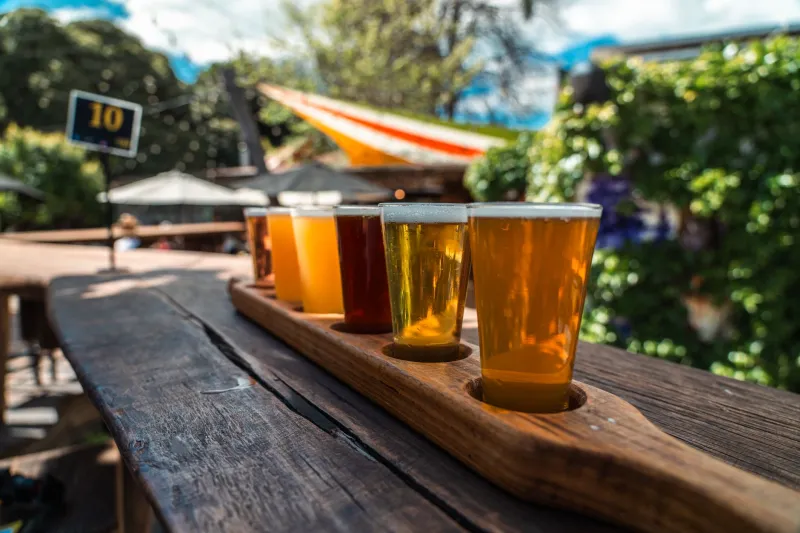
If you find a taproom pouring all six styles, order them in this order: cream ale, blonde, amber, red, brown, Belgian. You'll start light and end with yeast and malt, and you'll hit every flavor family without wrecking your palate on hops.
Then order an IPA, if you want one. It'll taste better after the detour, which is the whole argument in a sentence.